
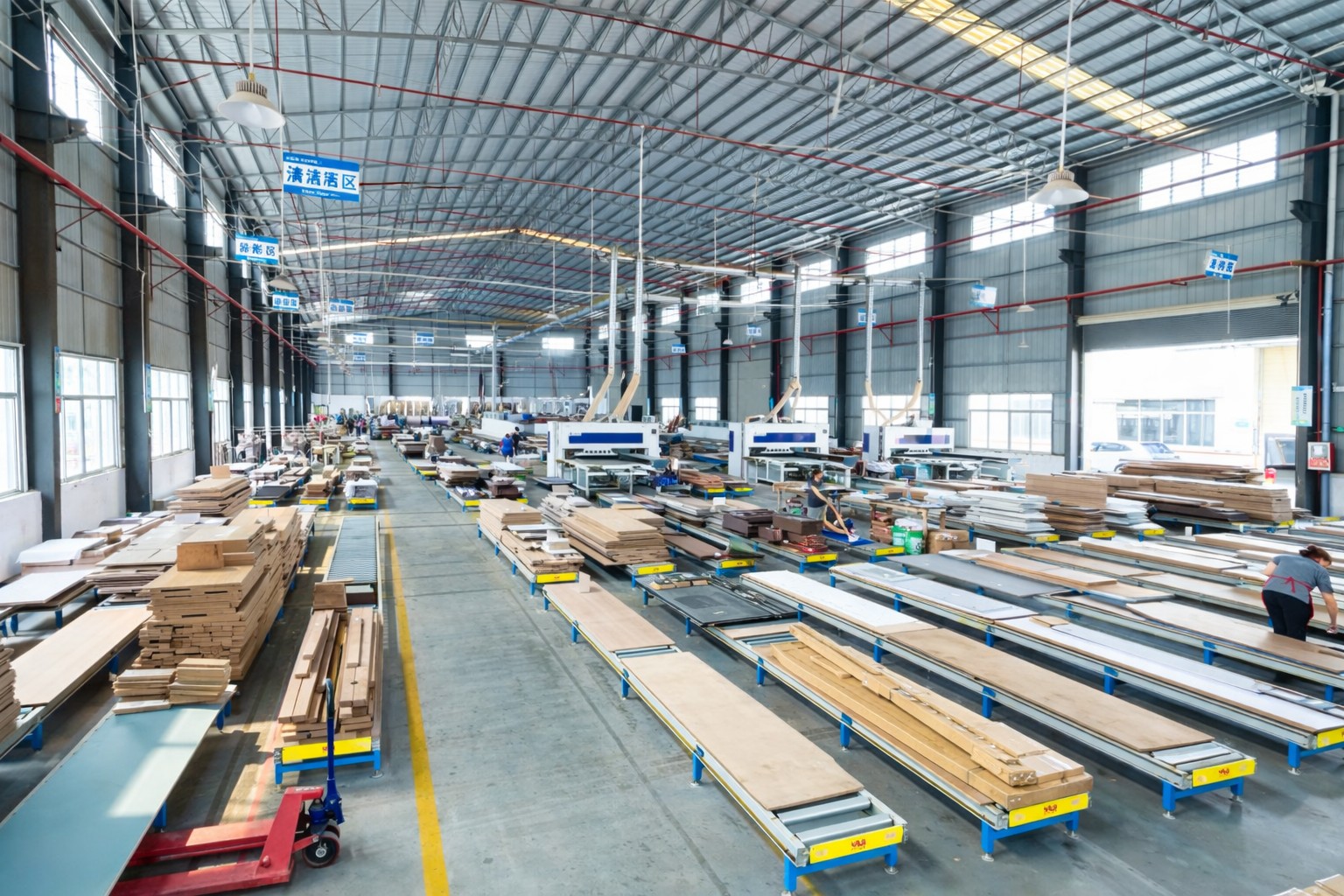
A buying trip to China is expensive, and switching suppliers mid-season is worse. Most of the problems importers run into are not manufacturing problems at all — they are supplier-selection problems that only show up three months later. Here is the checklist we would use if we were the buyer.
1. Is it actually a factory, or a trading company?
This is the first question for a reason. Plenty of “manufacturers” on B2B platforms are trading companies that sub-contract to a workshop. That is not automatically bad — a good trading company can be efficient — but it changes three things you care about:
- Price transparency. With a factory you are negotiating with the people who pay for the material.
- Problem solving. When a design will not hold up in production, a factory can change the drawing. A trader has to relay the message.
- Lead time control. Your order is queued against someone else’s. You rarely know whose.
How to check: ask for the workshop address and a video call walking through the floor. Ask what machines they run. Ask what happens if a panel is cut wrong — a factory answers in operational detail; a trader answers in marketing language.
2. What material are they actually using?
“Solid wood” and “wood” are not the same claim. So are “MDF”, “plywood”, “particle board” and “blockboard” — each behaves differently once it sits in a humid house with a pet leaning on it every day.
Ask for the material list per component, not just for the product overall. A pet sofa can legitimately be solid wood frame + engineered board panels + foam cushion. That is fine. What is not fine is not knowing which is which when something fails.
If your market has moisture, ask specifically how edges are sealed. Edge banding quality is one of the most common causes of swelling complaints, and it is invisible in a marketing photo.
3. What does their sample policy tell you?
The sample stage is where you learn how the supplier works. Pay attention to:
- Do they push back on a design that will not work? A supplier who says yes to everything at the sample stage will say nothing when it fails in bulk.
- Do they send photos before shipping the sample? Small thing, saves weeks.
- Is the sample made on the same line as bulk? A hand-built sample from a different process tells you very little.
If the sample is late and communication is vague, the bulk order will be worse. Sample stage behaviour is the most reliable predictor you will get.
4. Ask how they pack before you ask for a price
Packing is where a good product becomes a bad customer experience. A piece that arrives with a cracked panel costs you the margin on four others.
Worth asking:
- Carton or export crate for this piece, and why?
- What is the drop test, and what happens if a carton fails it?
- Can they send loading photos when the container is sealed?
- Will they do retail-ready cartons with your barcode and artwork?
Export crating and container loading handled in-house is a genuinely useful signal, because it means the supplier controls the last step rather than handing your order to a freight forwarder and hoping.
5. Get the documentation list in writing
Different markets need different paperwork, and it is much easier to ask now than to argue later. Depending on where you sell, you may need material test reports, factory audit documents, origin documents or a third-party inspection report.
Ask two questions: Which of these do you already provide routinely? and If my market needs something you do not have, can it be built into the schedule? A supplier who says “we will sort it at the end” is telling you they have not done it before.
6. Understand what their MOQ actually means
A low MOQ number is only useful if the price at that quantity still works for you. Ask for a small price ladder — for example at sample quantity, at one 20ft container, and at one 40ft container. That tells you what the real production threshold is, and it stops you from committing to a warehouse full of stock you have not tested.
7. Watch how fast they answer the boring questions
Everyone replies quickly to “please send your price list”. The signal is in how they handle “what happens if the panel colour differs between batches?” Slow, precise answers to dull questions are worth more than fast, vague answers to exciting ones.
Red flags worth walking away from
- They will not do a video walk-through of the workshop.
- Every question gets “no problem” with no detail.
- They cannot tell you who makes their boards.
- The sample and the bulk order are visibly different.
- Certificates are offered but never actually sent.
The short version
Ask for the workshop address, the material list per component, the sample policy, the packing spec, the document list, a price ladder, and one boring question — then judge them on how they answer the boring one. That is most of the due diligence, and it takes an afternoon.
If you would rather start with the list already done, our factory tour page walks through our own workshop, equipment and inspection stages. And if you have a product in mind, send us the drawing or a photo — we will come back with a price, a lead time and the changes we would recommend.